Understanding Oklahoma Wildlife Breeding Cycles, State Regulations, and Humane Home Protection
Every spring across Oklahoma, homeowners begin hearing scratching in attics, chirping in vents, rustling under decks, and movement inside walls. These sounds often trigger concern about wildlife intrusion — but what many homeowners don’t realize is that this timing overlaps with wildlife baby season.
Oklahoma’s mild winters, early spring warmups, long growing season, and diverse habitat corridors allow many native animals to begin breeding earlier than in northern states. From Oklahoma City suburbs and Tulsa neighborhoods to rural acreage, lake communities, and wooded river corridors, wildlife actively seek sheltered den sites inside human structures during this period.
When baby animals are present, wildlife removal becomes far more complicated — legally, ethically, and structurally. Understanding how breeding season affects wildlife behavior helps homeowners protect their property while staying compliant with Oklahoma wildlife regulations and humane standards.
What Is Wildlife Baby Season in Oklahoma?
Wildlife baby season refers to the months when animals give birth and raise their young. In Oklahoma, this period commonly spans late winter through early fall, with peak activity between March and August depending on species and weather patterns.
Oklahoma’s frequent temperature swings, storm systems, and early spring warmth often accelerate nesting behavior compared to colder regions.
Common Oklahoma wildlife that give birth around homes include:
- Raccoons (attics, chimneys, soffits, decks)
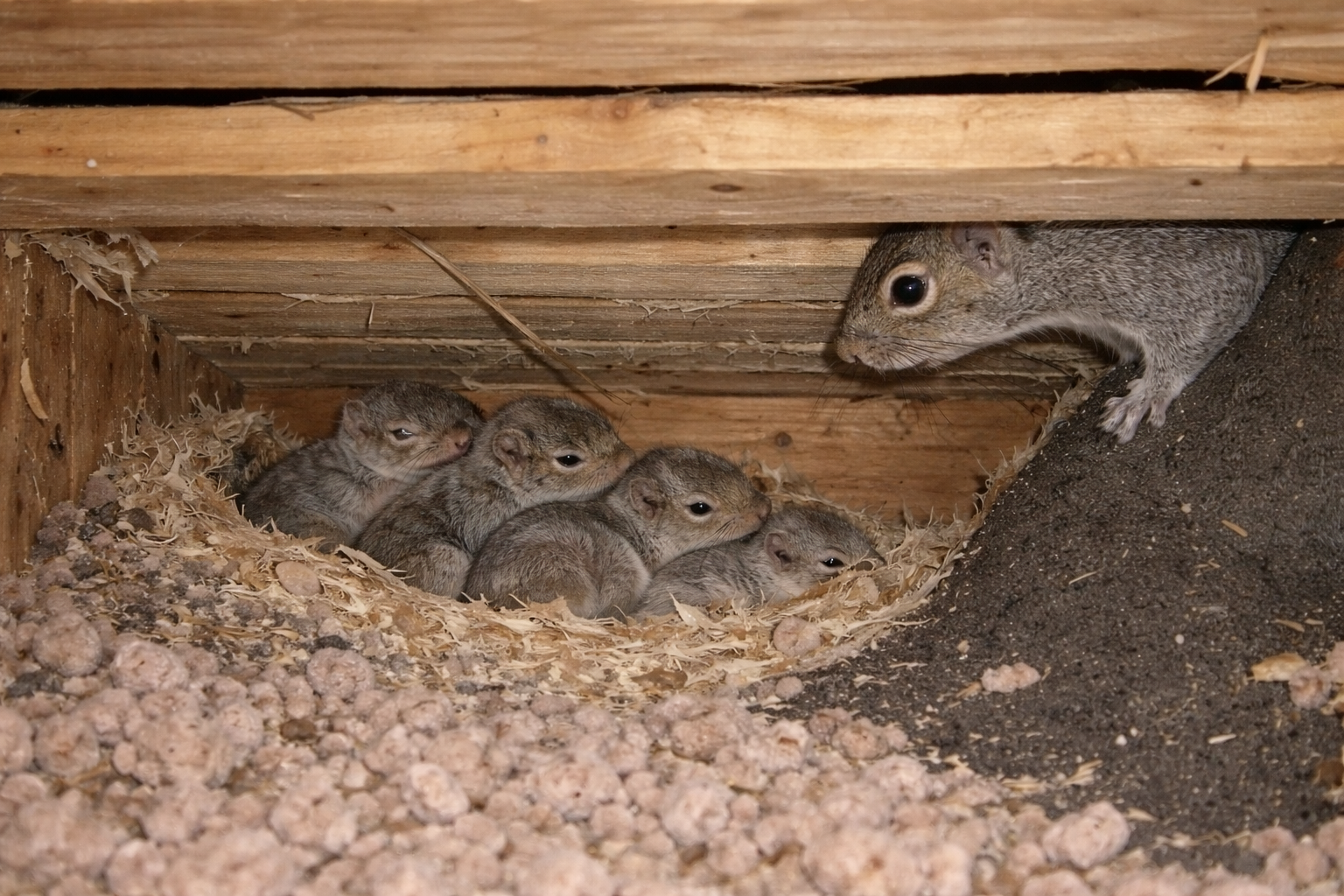
- Eastern gray squirrels, fox squirrels, flying squirrels (attics, wall cavities, eaves)
- Bats (attics, gable vents, barns, outbuildings)
- Skunks (crawlspaces, sheds, decks)
- Opossums (crawlspaces, garages)
- Birds (dryer vents, chimneys, porch cavities)
- Rodents (wall voids, garages, sheds)
Homes provide warmth, predator protection, and stability that natural den sites cannot always offer during Oklahoma’s volatile weather cycles.
Why Wildlife Removal Is More Complicated During Baby Season
1. Baby Animals Are Hidden and Unable to Leave
Newborn wildlife cannot travel or escape on their own. Many are blind, hairless, and completely dependent on their mother for warmth and feeding.
If a homeowner blocks an entry point or removes the adult animal without locating the babies:
- Young animals are trapped inside and die
- Strong odors develop from decomposition
- Flies, beetles, and secondary pests move in
- Sanitation risks increase
- The mother aggressively damages the structure trying to re-enter
- Repair costs often escalate quickly
This is one of the most common causes of odor complaints and emergency cleanup calls across Oklahoma neighborhoods.
2. Oklahoma Wildlife Laws Restrict Certain Activities During Breeding Season
The Oklahoma Department of Wildlife Conservation (ODWC) regulates how native wildlife may be handled, especially during nesting and maternity seasons.
Many species — particularly birds and bats — carry additional protections that restrict:
- Nest disturbance
- Lethal control
- Exclusion timing
- Relocation practices
Attempting removal without understanding these regulations can lead to legal violations and unintended harm to protected species. Licensed wildlife professionals stay current on state rules and humane standards.
3. Mothers Become Highly Determined and Destructive
When babies are present, adult animals will go to extreme lengths to protect or recover access to their young. Oklahoma homeowners often see:
- Torn shingles, soffits, fascia, and ridge vents
- Chewed siding and roof decking
- Repeated roofline breaches after repairs
- Interior wall damage
- Increased noise and activity
Storm events common in Oklahoma — wind, hail, pressure drops — further increase den-seeking behavior during baby season.
4. Humane Exclusion Requires Proper Timing
Wildlife exclusion works best when animals can safely leave the structure on their own. During baby season:
- Adults cannot abandon immobile young
- Sealing entry points traps babies inside
- Forced removal risks injury and mortality
- Some species cannot legally be excluded until young disperse
In many cases, professionals recommend monitoring and delayed exclusion until young animals become mobile and naturally vacate the den site.
5. Health and Sanitation Risks Increase
Young wildlife produce concentrated waste inside confined areas such as attics and wall cavities. This increases exposure risks including:
- Parasites (fleas, mites, ticks)
- Bacteria and airborne contaminants
- Strong ammonia odors
- Mold growth from moisture buildup
- Attraction of insects and scavengers
Improper cleanup without protective equipment can expose homeowners to serious health hazards.
Typical Wildlife Baby Season Timing in Oklahoma (General)
Exact timing varies by species, weather patterns, and region.
- Raccoons: February – June
- Squirrels: January – April and July – September (often two litters)
- Bats: May – August (maternity colonies)
- Skunks: March – June
- Opossums: February – August
- Birds: March – August
- Rodents: Nearly year-round in warm conditions
Because multiple species overlap, Oklahoma effectively experiences some level of baby season for much of the year.
Why DIY Wildlife Removal Fails in Oklahoma During Baby Season
Homeowners commonly attempt:
- Sealing roof or vent openings
- Using repellents or deterrents
- Trapping adults
- Blocking access mid-season
When babies are present, these actions often create:
- Trapped young inside the structure
- Increased property damage
- Persistent odors and sanitation problems
- Repeat infestations
- Higher long-term repair costs
Wildlife behavior during breeding season is driven by survival instincts — not deterrents.
Humane and Effective Solutions for Oklahoma Homeowners
✔️ Professional Inspection
Identifies species, nest location, entry points, and whether young are present.
✔️ Monitoring and Timing Strategy
Allows young to mature safely when legally required.
✔️ Controlled Intervention (When Allowed)
Performed only by licensed professionals following ODWC guidelines.
✔️ Preventive Preparation
Strengthening vulnerable areas before final exclusion.
✔️ Final Exclusion and Sanitation
Permanent sealing and cleanup once animals vacate.
This approach protects both property and wildlife populations long-term.
When Oklahoma Homeowners Should Act Immediately
Immediate professional evaluation is recommended if:
- Animals enter living spaces
- Electrical wiring is exposed
- Water damage is occurring
- Strong odors are present
- Aggressive behavior is observed
- Structural integrity is compromised
Frequently Asked Questions About Wildlife Baby Season in Oklahoma
Can I remove animals from my attic during baby season in Oklahoma?
In many cases, removal is restricted when babies are present, especially for birds and bats. Some species may only be excluded once young are mobile. A licensed wildlife professional can determine what is legally allowed.
Why do animals choose Oklahoma homes to raise their babies?
Homes provide stable temperatures, protection from predators, and shelter from Oklahoma’s frequent storms, wind events, and temperature swings.
What happens if babies are accidentally trapped inside?
They may die inside walls or attics, creating odor, insect infestations, and sanitation hazards. Mothers often cause additional damage attempting to re-enter.
How long does baby season last in Oklahoma?
Depending on species, it can run from late winter through early fall, with multiple overlapping breeding cycles.
Can I seal entry points while babies are inside?
No. Sealing traps the young and creates serious health and legal risks. Proper timing is essential.
Are bats protected in Oklahoma?
Yes. Bats have special protections, especially during maternity season. Exclusion timing is heavily regulated.
What should I do if I suspect babies are present?
Avoid disturbing the area and schedule a professional inspection to determine safe next steps.
Related Oklahoma Homeowner Resources
- Oklahoma Weather & Wildlife Season Guide
- Oklahoma Wildlife Guide
- Humane Wildlife Exclusion Guide
- Wildlife Cleanup & Sanitation Safety
Disclaimer
This article is for educational purposes only. Wildlife regulations vary by species and situation. Always consult licensed professionals and the Oklahoma Department of Wildlife Conservation before attempting wildlife removal or exclusion.

Leave a Reply