Copperhead Snakes in Oklahoma

Identification, Habitat, Behavior, Safety, and Living Responsibly With Native Wildlife
Copperhead snakes are one of the most commonly encountered venomous snakes in eastern Oklahoma. Their excellent camouflage often causes people to overlook them rather than avoid them, which is why most encounters happen accidentally.
While copperheads are venomous, they are not aggressive animals. Learning how to recognize them, where they are most commonly found in Oklahoma, and how to safely coexist helps reduce unnecessary fear and prevent avoidable encounters.
Quick Identification Snapshot
Common Name: Copperhead
Scientific Name: Agkistrodon contortrix
Average Length: 24–36 inches (occasionally over 40 inches)
Venomous: Yes
Primary Color: Tan, copper, light brown with darker hourglass bands
Head Shape: Broad and triangular
Pupils: Vertical (cat-like)
Active Season in Oklahoma: March through October (weather dependent)
Common Look-Alikes: Water snakes, juvenile rat snakes, kingsnakes
Copperheads blend extremely well with fallen leaves and forest debris, making visual detection difficult even at close range.
How to Identify a Copperhead in Oklahoma
Copperheads are named for their distinctive copper-colored head and patterned body. The most reliable identifying feature is the hourglass-shaped banding across the body. In Oklahoma populations, the darker bands typically narrow across the spine and widen along the sides.
Key Identification Traits
- Hourglass-shaped bands across the body
- Warm copper or orange tint on the head
- Thick, muscular body compared to many non-venomous snakes
- Vertical pupils when visible from a safe distance
- Heat-sensing pits between the eyes and nostrils
Juvenile Copperheads
Young copperheads often have a bright yellow or greenish tail tip used for luring prey. This coloration fades as the snake matures.
Common Misidentifications in Oklahoma
Copperheads are frequently mistaken for:
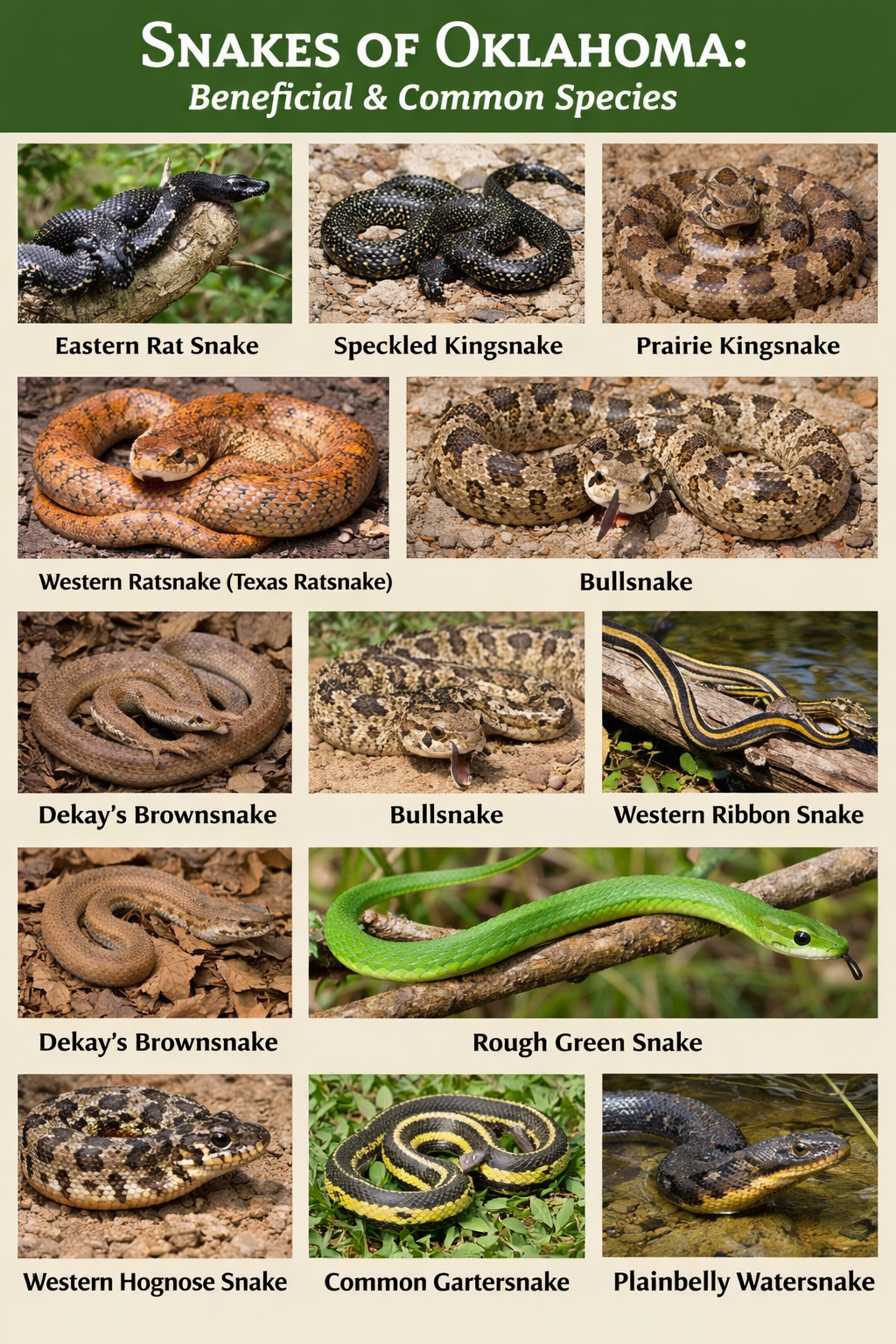
- Plain-bellied water snakes
- Western rat snakes
- Prairie kingsnakes
Non-venomous species typically have round pupils, different band shapes, and slimmer body profiles. Misidentification leads to many unnecessary snake killings each year.
Where Copperheads Live in Oklahoma
Copperheads are most common in eastern and southeastern Oklahoma, where forests, rocky hillsides, and creek corridors provide ideal shelter and prey availability.
They are frequently found in:
- Deciduous woodlands and forest edges
- Creek bottoms and riparian corridors
- Rocky slopes and outcroppings
- Brush piles, leaf litter, and fallen logs
- Transitional zones between woods and open land
As suburban neighborhoods expand into wooded areas, copperhead habitat increasingly overlaps with residential landscapes. Yards with mature trees, stone landscaping, stacked firewood, and dense ground cover create favorable microhabitats.
Oklahoma’s clay soils and fractured limestone geology also provide natural crevices used for shelter and winter brumation.
Behavior and Seasonal Activity Patterns
Copperheads are ambush predators that rely on camouflage rather than speed or aggression. Many encounters occur when a snake remains motionless and goes unnoticed.
Seasonal Behavior in Oklahoma
- Spring: Increased movement during mating and warming temperatures
- Summer: More active during early morning and evening hours during extreme heat
- Fall: Increased foraging before winter dormancy
- Winter: Shelter in underground crevices, root systems, and rock voids
Storm and Weather Influence
Heavy rainfall and flooding can temporarily displace copperheads from creek corridors into higher ground, sometimes increasing short-term sightings near homes.
Are Copperheads Dangerous?
Copperheads are venomous and capable of delivering medically significant bites, but they are not aggressive animals.
Important safety facts:
- Most bites occur when someone accidentally steps on or attempts to handle a snake
- Copperheads typically attempt to remain still or retreat rather than strike
- Fatalities are extremely rare with prompt medical care
- Any bite requires immediate medical evaluation
Maintaining distance and allowing the snake to move away naturally prevents most incidents.
Why Copperheads Appear Near Homes
Copperheads are attracted to habitat and prey rather than structures themselves.
Common attractants include:
- Rodent activity around foundations and sheds
- Woodpiles, debris piles, and rock borders
- Dense landscaping and ground cover
- Moist areas created by irrigation or drainage
- Crawlspace gaps and shaded structural voids
- Retaining walls and slab edges
Homes near wooded greenbelts, creek corridors, or undeveloped land see higher encounter probability.
Living Safely With Copperheads
Coexistence and Prevention
Eliminating snakes from outdoor environments is neither practical nor environmentally responsible. Long-term safety comes from habitat awareness and property management.
Practical Prevention Strategies
- Keep grass trimmed and vegetation managed
- Remove brush piles, stacked lumber, and excess debris
- Elevate firewood away from structures
- Seal crawlspace openings and foundation gaps
- Reduce rodent attractants and food sources
- Use gravel or low-cover landscaping near foundations
- Maintain clear visibility around walkways
Safe Behavior Tips
- Wear closed-toe shoes in wooded or overgrown areas
- Use a flashlight at night during active seasons
- Never attempt to handle or relocate snakes
- Allow snakes space to move away naturally
Copperheads play an important role in controlling rodent populations and supporting balanced ecosystems.
When Professional Help May Be Appropriate
Professional wildlife assistance may be appropriate when:
- A snake is repeatedly entering enclosed spaces
- The animal cannot safely exit on its own
- There is high foot traffic in the area
- Structural entry points require evaluation or sealing
- Residents cannot safely maintain distance
Professional assessment helps ensure safe resolution while remaining compliant with Oklahoma wildlife regulations.
Fun Copperhead Facts
- Copperheads can remain motionless for long periods relying on camouflage
- Juveniles use bright tail tips to lure prey
- They often return to the same seasonal shelter locations
- Their coloration closely matches fallen oak and hickory leaves
- Copperheads help regulate rodent populations
Related Oklahoma Snake Guides
- Snakes of Oklahoma — Identification and Safety Guide
- Common Snakes of Oklahoma
- Nuisance Snakes of Oklahoma
- Wildlife Exclusion and Home Protection Guide

Educational and Safety Disclaimer
This content is provided for general educational purposes only and is not a substitute for professional medical advice, emergency response, or licensed wildlife guidance. Venomous snake encounters can present serious health risks. If a bite occurs, seek immediate medical care by calling emergency services. Always follow Oklahoma wildlife laws and avoid attempting to handle, capture, or relocate snakes yourself.
